


Views: 0 Author: Site Editor Publish Time: 2026-03-19 Origin: Site


In February 2026, the General Office of the State Council issued Opinions on Improving the National Unified Electricity Market System (Guo Ban Fa〔2026〕No. 4). From such core dimensions as the development of a national unified electricity market, market-based allocation of power resources, and standardization of trading rules, the document has charted a new course for the high-quality development of the new energy industry. It promotes cross-regional trading of green electricity, the deep integration of new energy and energy storage, and further unlocks the market potential of industrial and commercial distributed photovoltaic (PV) systems.
As early as early 2025, the National Development and Reform Commission and the National Energy Administration jointly issued the Notice on Deepening Market-Oriented Reform of On-Grid Tariffs for New Energy and Promoting Its High-Quality Development (Document No. 136). This notice marked the advent of a new era in which China’s PV sector fully embraces grid parity through bidding, replacing the fixed feed-in tariff model and returning the PV industry to its essence as an electricity commodity.
These two major policies have worked together to establish a new framework for electricity market-oriented reform. They have opened up broad prospects for the integrated development of new energy and the real economy, while setting new market-oriented requirements for the application of green power across various industries.
Long before these policies were introduced, TCL PV Technology had already delivered an outstanding solution—the 11.79MW distributed PV power station project at the TCL Feixi Logistics Park. The project provides a replicable and implementable solution for the logistics industry to address challenges in its green transition, serving as a vivid model for the coordinated development of "PV + Logistics" under the dual policy context.
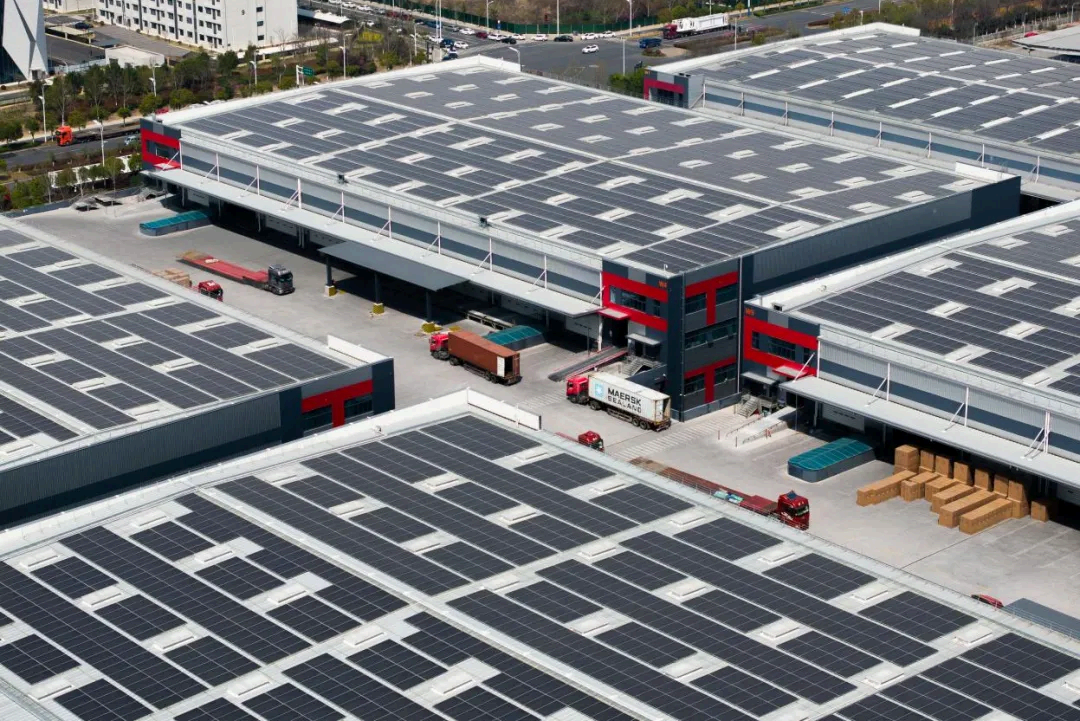
Breaking the "Impossible Triangle" in the logistics industry
The logistics industry is the "major artery" of the national economy and also a major emitter of carbon.
Therefore, under the "dual carbon" goals, this high-energy-consuming industry is under tremendous pressure to transform. The national plan requires that by 2025, the energy consumption per unit of logistics should be reduced by more than 10% compared to 2020. Meanwhile, the national carbon quota price continues to rise, and various regions implement the dual assessment of "carbon quota + green power consumption", which keeps increasing the cost of carbon compliance for enterprises.
The issuance of high standards has given birth to a potential, trillion-scale green logistics blue ocean.
However, ideals are full and rich, while reality is harsh and unyielding.
Logistics enterprises generally face the "triple challenges" of high energy costs, strict carbon compliance, and high technical and financial thresholds. Electricity charges often account for 15% to 20% of operating costs, and fluctuations in electricity prices directly affect profits. The dual assessment of carbon quotas and green power consumption is gradually being rolled out, and those who fail to meet the standards will face severe penalties. However, the construction of distributed photovoltaic systems requires huge investment and has a long payback period, while the cost of new clean transportation equipment is high.
The goals of cost reduction, carbon emission reduction and business development were once trapped in a triangular predicament where they could not be achieved simultaneously.
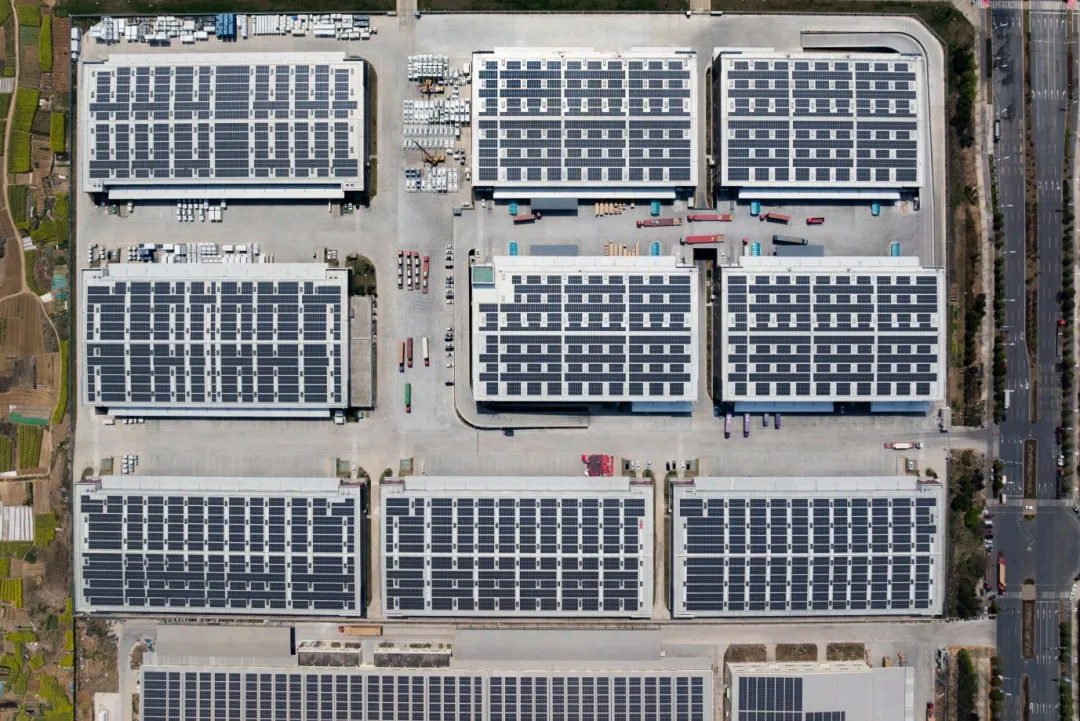
Facing this challenge, TCL Photovoltaic Technology has created a replicable and sustainable green growth engine in Feixi Logistics Park through technological innovation and model reconstruction.
The project adopts a light-asset cooperation model of "full investment + 25-year trusteeship", with TCL Photovoltaic Technology fully investing in the construction and operation for 25 years. The park does not need to invest any funds, fundamentally lowering the technical and financial thresholds for enterprises.
Meanwhile, TCL Photovoltaic Technology has built a 11.79MW rooftop photovoltaic power station by providing one-stop services from site survey and design to construction and grid connection, making full use of the large and solid factory rooftops in the park. This has turned the idle rooftops into a continuous "power station in the air".
More importantly, this project has brought considerable green benefits.
The power station generates approximately 11.46 million kilowatt-hours of electricity annually. It sells electricity at 0.38 yuan per kilowatt-hour under the full grid connection model, generating an additional 4.35 million yuan in revenue for the enterprise each year. By superimposing the benefits from participating in spot electricity trading and carbon asset trading, green electricity is transformed into sustainable business benefits, becoming a new second growth curve for enterprises.
Meanwhile, the power station can reduce carbon dioxide emissions by approximately 240,000 tons annually, helping the park build an image of a "zero-carbon supply chain" and significantly enhancing the brand influence and market competitiveness of enterprises. Successfully achieved the triple breakthroughs of "green electricity revenue generation, brand upgrading, and compliance cost reduction".
Determine the source based on the load, and match the source with the load
At its core, the success of this project is not only attributed to the precise grasp of the new energy electricity price mechanism and the new rules of the power market, but also to the forward-looking prediction of the trend of power marketization reform.
The promulgation of Document No. 136 marks that photovoltaic power generation has bid farewell to the "comfort zone" of fixed electricity prices and fully embraced market competition. Understanding the "mechanism electricity price" and the "mechanism electricity volume" it is bound to becomes the key to grasping the new logic of photovoltaic power station revenue, which is also the core foundation for new energy projects to achieve market-oriented profitability under Document No. 4.
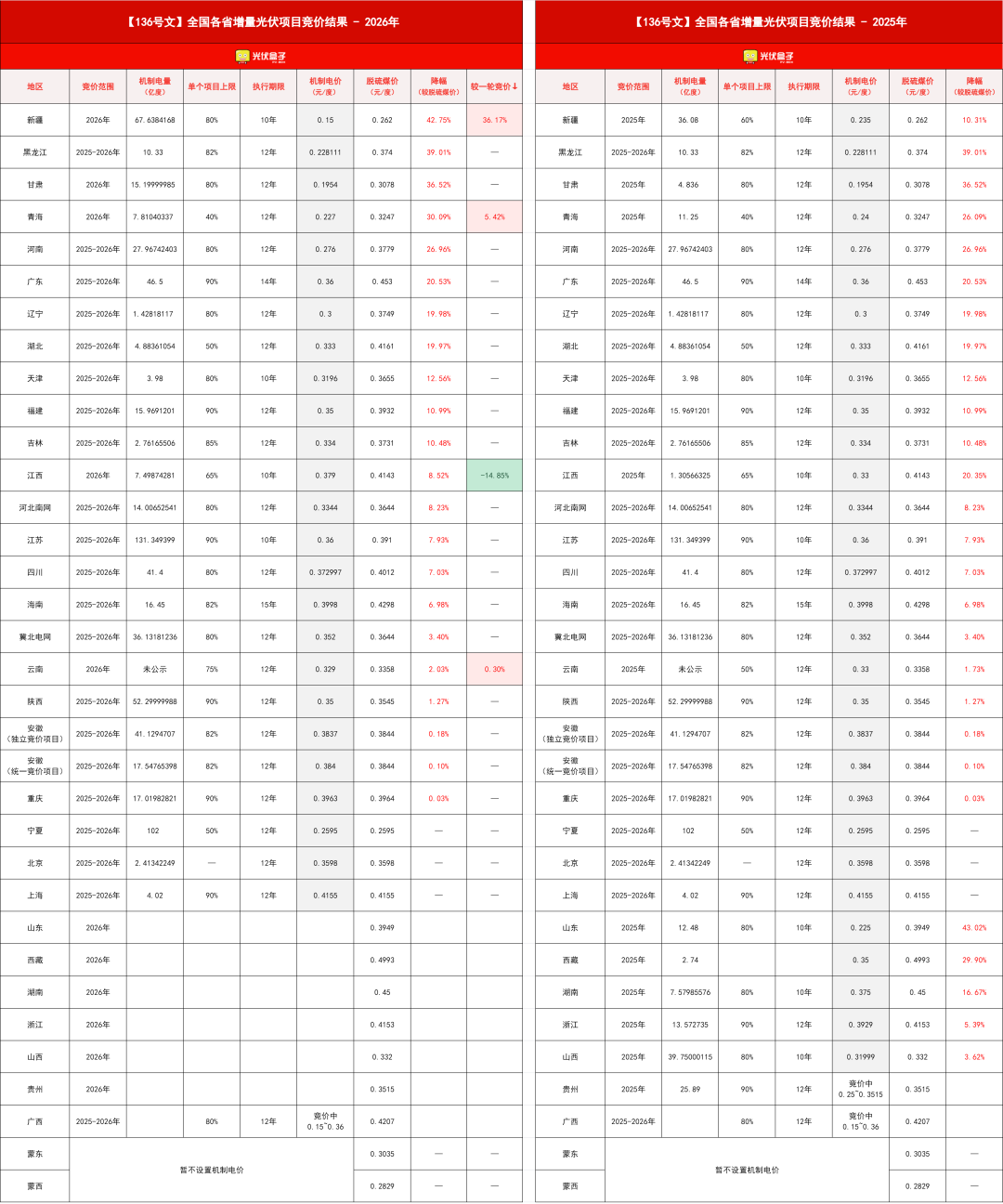
In simple terms, the mechanism electricity price formed through bidding locks in a portion of the long-term benchmark income for photovoltaic power stations. The corresponding "mechanism electricity volume" will be settled monthly based on the average market price and the mechanism electricity price for more than ten years under a "refund for excess and compensation for shortage" settlement mechanism, which mitiges the risk of electricity price fluctuations caused by the intermittency and volatility of new energy power generation.
The power generation of a photovoltaic power station is thus divided into two parts:one part is incorporated into the "mechanism" and enjoys the bottom-line guarantee of the above-mentioned price difference compensation; Another part is completely "naked" in the market, directly facing the uncertainty of electricity price fluctuations.
The rise and fall of the two shares determine the safety margin and growth potential of the power station's revenue.
The latest Document No. 4 has promoted the construction of a unified national electricity market, further intensifying the market-based competition on electricity prices and fundamentally transforming the operational logic of photovoltaic projects - the revenue of power stations no longer solely depends on "how much electricity is generated", but more crucially on "at what price the electricity is sold" and the matching efficiency between power generation and consumption.
In the new market environment, the previous extensive model that blindly pursued installation scale is no longer sustainable. The principle of "determining the source based on the load and matching the source with the load" is becoming the core criterion for determining the economic efficiency and safety of projects. This is also a key measure to meet the resource allocation requirements of the national unified power market.
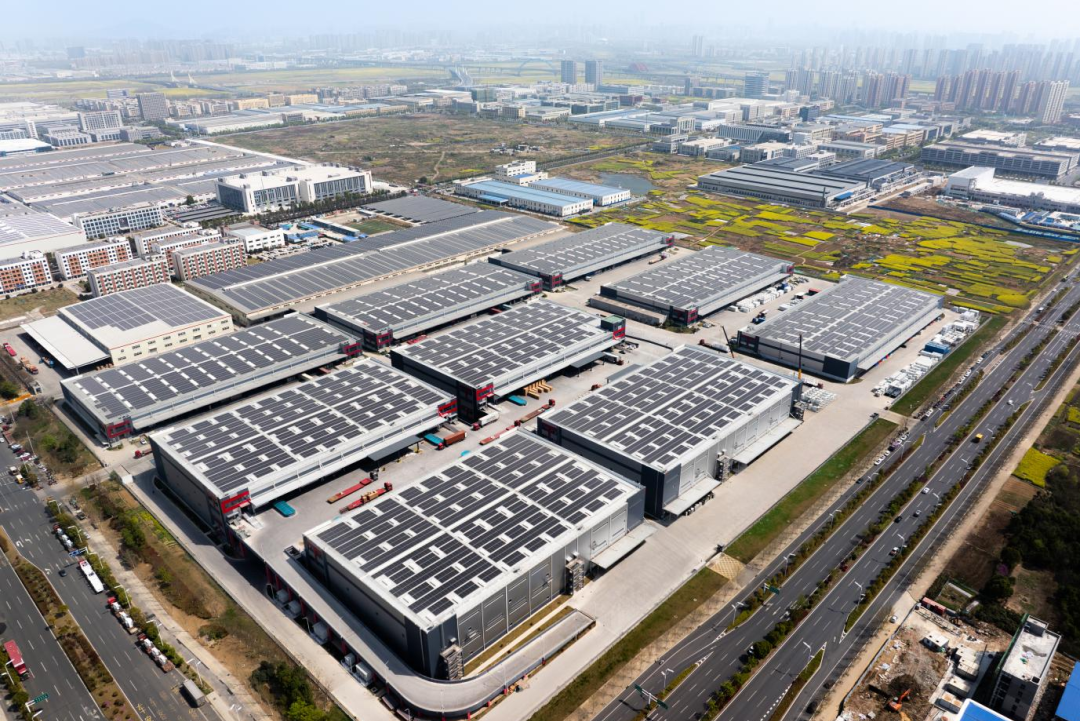
For distributed photovoltaic systems, this means that it is necessary to start from the user load, achieve precise matching of power generation and power consumption in time and space, and increase the proportion of self-generation and self-consumption as much as possible to hedge against the price risk in the spot market.
Only in this way can one win in the fierce competition for mechanism electricity by achieving a more favorable levelized cost per kilowatt-hour, and further help property owners meet compliance requirements such as carbon quotas and green electricity consumption.
Obviously, the traditional standardized product sales model is no longer sustainable.
Leading photovoltaic enterprises are systematically reshaping their product and service systems, transforming from mere equipment suppliers to full-stack energy partners centered on customer benefits.
As a representative among them, TCL Photovoltaic Technology, relying on its profound technological accumulation and resource integration capabilities, is accelerating the evolution of its business model into a comprehensive energy solution provider deeply bound to customer returns. By implementing benchmark projects in multiple industries and driving with the dual wheels of "technology + model", TCL Photovoltaic Technology endows industrial and commercial customers with sustainable green competitiveness.
Replace the sales of standardized products with scenario-based comprehensive solutions. TCL Photovoltaic Technology delves into the business scenarios of its clients, modularizing and customizing its full-stack capabilities in photovoltaic modules, energy storage systems, intelligent operation and maintenance, financial solution design, and carbon asset operation into the clients' value chains.
The real test
In a market-oriented environment, power stations need to adjust their operation strategies based on real-time electricity price signals, participate in green electricity and green certificate trading to obtain environmental benefits, and utilize intelligent technologies to analyze massive operational data to achieve preventive operation and maintenance. This requires a more intelligent central system.
For this reason, TCL Photovoltaic Technology has developed an integrated energy management platform, building a "energy-carbon-electricity" collaborative system that connects the entire chain from green electricity production, intelligent operation and maintenance to green certificate subscription and carbon asset development.
By leveraging digital and AI technologies, the platform provides intelligent protection throughout the entire life cycle of photovoltaic power stations, ensuring the efficient operation of power generation equipment and assisting owners in formulating trading strategies in the complex electricity market to capture the appreciation space of electricity and carbon assets.
With the advancement of the electricity marketization, the model that solely relies on the price difference of electricity for profit is gradually fading. The future competitive focus will lie in who can provide customers with a one-stop service of "electricity trading + energy efficiency management + carbon asset operation".
TCL Photovoltaic Technology has made early preparations. Once the qualification for power sales is obtained, it can enter the user side, combine its own distributed photovoltaic, energy storage and energy-carbon management platform, optimize the energy consumption structure, obtain more favorable electricity prices in the power market, and maximize the value of green electricity.
The changes triggered by Document No. 136 and Document No. 4 are essentially a "supply-side reform" in the photovoltaic industry driven by the market, and they represent a profound upgrade in the integrated development of new energy and the real economy.
They have broken the comfortable environment that relied on fixed electricity prices for security in the past, forcing every participant in the industrial chain - from investors and developers to equipment suppliers and service providers - to return to the essence of business, thinking about how to produce more efficient and reliable green electricity at a lower cost, and how to integrate new energy more deeply into the real economy to achieve the coordinated development of industry and energy.
In the short term, the competitive bidding mechanism for grid connection may lead to a decline in electricity prices and adjustments in project revenue expectations. But in the long run, it eliminates extensive and inefficient practices and encourages technological innovation and lean management.
This mechanism is bound to find a new balance in the game among all parties and guide the industry towards a new stage of high quality and sustainability. The practice of TCL Feixi Logistics Park not only creates a benchmark sample of "photovoltaic + logistics" for the logistics industry, but also confirms the correct path of integrating new energy with the real economy under the power marketization reform.
Photovoltaic panels on factory rooftops are no longer merely environmental labels or marginal benefits. Under the new framework of mechanism electricity prices and electricity market-based trading, it is evolving into a core asset that requires meticulous operation and in-depth participation in the energy market.
