


Views: 0 Author: Site Editor Publish Time: 2026-03-25 Origin: Site


On March 22, 2026, Musk officially unveiled SpaceX's space AI computing power satellite at the Terafab Superchip factory launch event. It is reported that a single mini version satellite has a power of up to 100kW and its solar panels can be extended nearly 170 meters, which can support about 100 NVIDIA H200 panels to operate at full capacity. According to Musk's long-term plan, one million space AI computing power satellites will be deployed in the future, with power reaching the megawatt level. This will lead to an exponential increase in the demand for high-power, lightweight, and radiation-resistant photovoltaic modules.
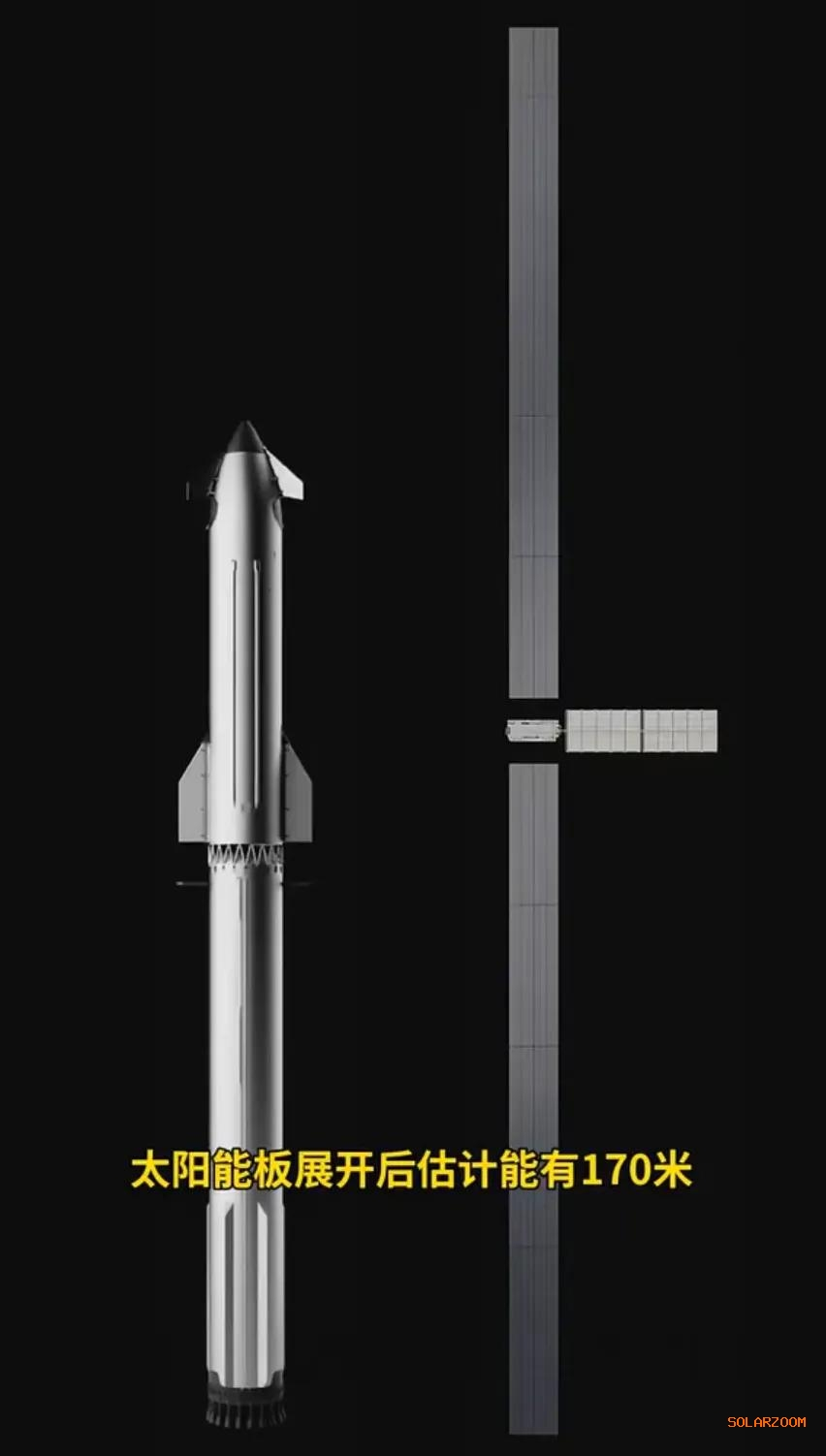
According to media reports, the power of a single space AI computing satellite is 100kW, which is 10 times that of Starlink V2mini and 3.5 times that of the traditional communication satellite Jupiter 3. The networking of millions of cells means hundreds of GW-level space installations. Due to the high cost and limited production capacity of traditional gallium arsenide cells, they cannot support large-scale deployment. Therefore, P-type HJT may become the optimal solution in the medium and short term.
At present, China's HJT cells have achieved ultra-thin mass production of 50-70 μm, with significant weight reduction and excellent radiation resistance. Their cost is only about one-tenth of that of traditional space cells, making them perfectly suitable for large-scale low-orbit networking.
Previously, SpaceX has clearly indicated its inclination towards the P-type HJT route. China holds a global leading position in HJT complete line equipment, ultra-thin silicon wafers, high-efficiency batteries, and aerospace-grade packaging materials, and possesses the capacity for rapid expansion and stable delivery.
Industry insiders point out that the frequent launches of SpaceX and global low-orbit constellations have driven a surge in demand for HJT equipment, ultra-thin silicon wafers, anti-radiation films, CPI flexible packaging, etc. There have been purchase intentions worth tens of billions of yuan for equipment, and orders in the industrial chain continue to be released. With the large-scale landing of SpaceX, China's high-efficiency batteries, ultra-thin silicon wafers and aerospace material system have become the global benchmark for space photovoltaics, seizing the initiative in future space energy.
