


Views: 0 Author: Site Editor Publish Time: 2026-03-03 Origin: Site


In 2025, the issuance of Document No. 136 was like a policy thunderbolt, pushing the household photovoltaic (PV) industry into the deep water of market-oriented reform.
As the curtain of the full market entry of photovoltaic power generation officially opened, household PV, which has weak risk resistance, became the most affected market — shifting from the "era of fixed subsidies" to the "era of market competition". It is highly probable that the comprehensive on-grid electricity price of household PV will face a downward trend, the asset value will be revalued, and short-term market volatility is inevitable.
Faced with this drastic change, some chose to withdraw, some chose to wait and see, but more people are thinking: Where is the next way out for household PV?
What's the next step for household photovoltaic systems?
Looking at the history of the industry, whenever there is a major fluctuation in the industry profit pattern, the business model will inevitably iterate accordingly. This law is particularly prominent in the field of household photovoltaic (PV) power generation.
In the early stage of the development of the household PV market, the "install-and-reward-immediately" model was implemented — enterprises only needed to complete the equipment installation to receive national rewards, and did not even need to wait until the grid connection was completed. This extensive reward method soon gave rise to a large number of speculative behaviors in the household PV market, and was eventually replaced by the "subsidy era".
During the subsidy phase, the state provided installation subsidies or feed-in tariffs on the premise of grid connection (the electricity sales price in some regions was as high as 1 yuan per kWh), thus forming a complete closed loop of "installation - grid connection - subsidy". With the support of generous subsidy policies, the economy of PV projects was greatly improved, and the "PV loan" model emerged at the right time — through loans, farmers or enterprises were supported to install PV with low investment and more quickly.
After the "531 Policy" in 2018, the state accelerated the reduction of photovoltaic power generation subsidies. The reduction in subsidies reduced the income expectation of power stations, and the loan policies and repayment terms of PV loans were also affected. For example, the original credit period may be adjusted from 5 years to 8 years to better match the income expectation of power stations without subsidies. Since then, the PV loan model has gradually withdrawn from the market.
It was replaced by the "operating lease" model. Under this model, enterprises lease equipment to users at a profit sharing ratio of about 15%, and realize risk sharing through a floating income mechanism (the average annual rent per panel is about 50 yuan) — when the power generation is high, the user's income increases; when the power generation is low, the enterprise's cost also decreases synchronously.
In recent years, with the price of PV modules dropping by more than 70%, the power increasing to 600W+ and the stability significantly enhanced, the development of household PV projects has gradually shifted to the "pure roof lease" model, with fixed rent and profit realized through large-scale development...
So, under the new market environment today, what kind of adjustments will the development model of the household PV market usher in?
It is generally recognized in the industry that as household PV enters the power market, the decline in electricity prices is almost inevitable, and the project investment return rate will decrease accordingly. Against this background, reasonably controlling the development and construction costs of projects has become the top priority for enterprises.
And the first step for most enterprises to reduce project development costs is to cut the high channel fees.
Since development enterprises are difficult to directly sink to the front line to connect with ordinary people, the development of household PV projects mostly adopts the dealer model, relying on channel resources. In the past few years, the household PV track has been fiercely competitive. Enterprises have had to seize the market through price competition, which has further continuously pushed up "channel fees". In some regions, the market development fee is even higher than 1 yuan/W!
Since the issuance of Document No. 136, leading development enterprises have significantly reduced the channel fees, installation fees, etc. for PV power station development, preparing for the price reduction after "April 30" and "May 31". According to an agent engaged in household PV in Jiangsu, the installation fee given to him by the platform was 1,000 yuan per panel before, but now it has been reduced by nearly 40%.
However, simply reducing channel fees is naturally not a long-term solution. How can we reduce reliance on channel resources while still expanding business on a large scale? Household PV enterprises are accelerating the exploration of new routes.
More and more enterprises are turning their attention to whole-village development.
The trend of "whole village development" is on the rise
Whole-village development of household PV is not a new thing. In recent years, with the sharp increase in the installed capacity of distributed PV, the problem of grid absorption has become increasingly prominent. On the one hand, the accessible capacity on the distribution side is limited; on the other hand, the absorption on the power consumption side is insufficient, leading to reverse power transmission from low voltage to high voltage in some regions. To alleviate the contradictions between absorption and access, the whole-village development model of household PV emerged as the times require.
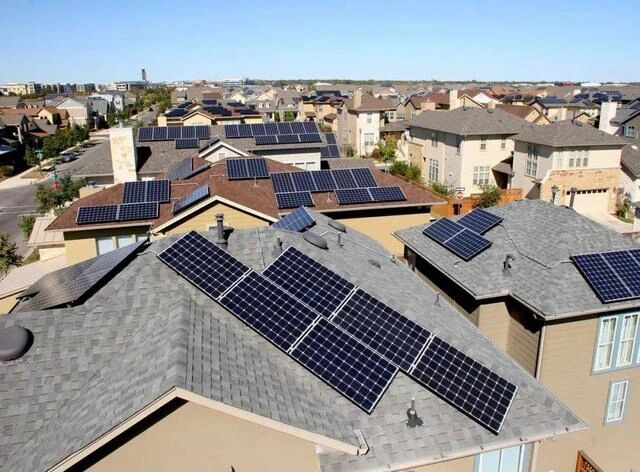
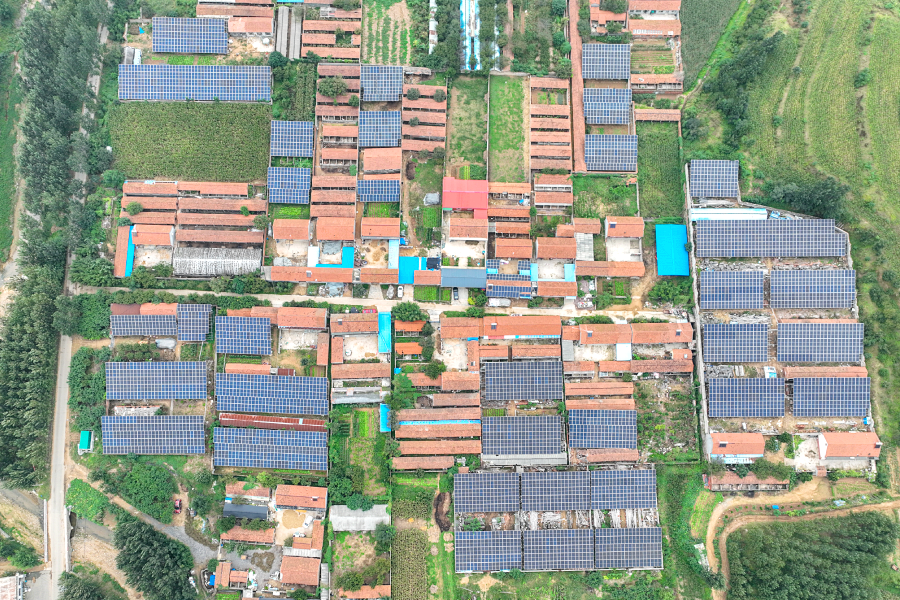
The so-called "whole-village development" takes the village as the unit to uniformly coordinate resources such as roofs and land, replacing the traditional scattered single-household installation model. It usually adopts the "centralized confluence and step-up grid connection" technology to centrally step up the scattered household PV power generation and then connect it to the power grid.
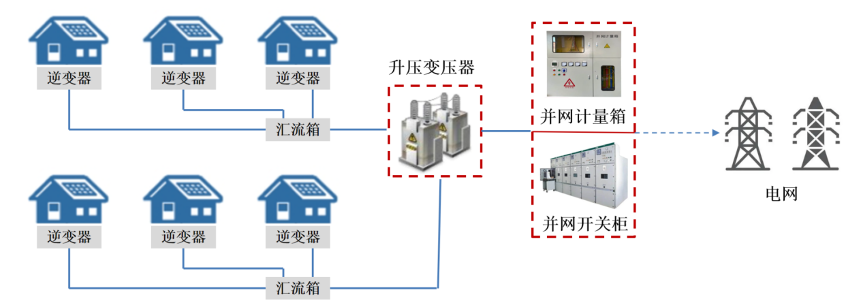
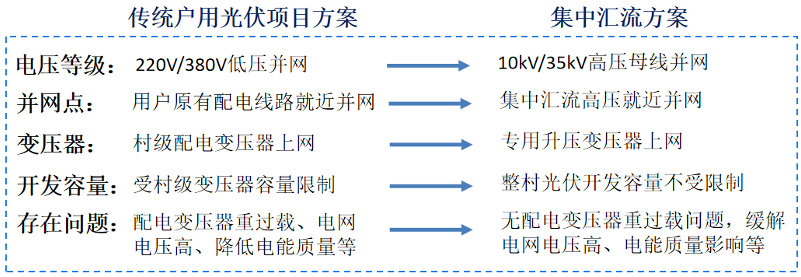
Under the traditional model, the uncontrollable installed capacity of distributed PV is an important reason for reverse overload of some distribution transformers. In the "whole-village development" model, however, the development enterprise configures step-up transformers according to the developable capacity of the village, thus solving the problems of overcapacity power generation and insufficient transformer capacity.
Theoretically speaking, if there is no accessible capacity left in the low-voltage distribution network of a certain area, but there are still installable roofs or courtyards, and the villages are relatively concentrated, and the power supply station in the area supports the additional investment of transformers, and the upper-level substation has sufficient capacity, then the "whole-village development" business can be carried out to effectively deal with the overcapacity of distribution transformers.
Returning to the issue of reliance on channel resources, for household PV enterprises, shifting from scattered development to centralized development and reducing intermediate links will help reduce enterprises' dependence on channel resources.
Under the traditional single-household model, it is necessary to connect with farmers one by one, involving links such as roof resource negotiation, installation design, and grid connection approval. Enterprises need to rely on a large number of local channel partners (such as agents and distributors) to meet the scattered needs of farmers.
In contrast, whole-village development integrates scattered roof resources into large-scale projects through centralized confluence and unified planning. Enterprises can directly cooperate with village committees or local governments, reducing reliance on scattered channels. For example, Chint Aneng cooperates with local governments through the "Whole-Village Development Pro Plan" to directly connect with village collective resources.
In fact, in addition to the consideration of reducing reliance on channels, the strong guidance of national and local policies in recent years is also an important reason for PV enterprises to focus on whole-village development.
As early as November 2023, Shi Jingli, a researcher at the Energy Research Institute of the National Development and Reform Commission (NDRC), put forward a suggestion that in areas where household PV accounts for a certain proportion, the centralized confluence model should be promoted. Many regions such as Shandong, Jiangsu, Henan, Jiangxi, Guangxi and Guangdong have also issued documents to encourage the implementation of the whole-village "centralized confluence" grid connection model, and encourage the implementation of "centralized confluence + station area energy storage".
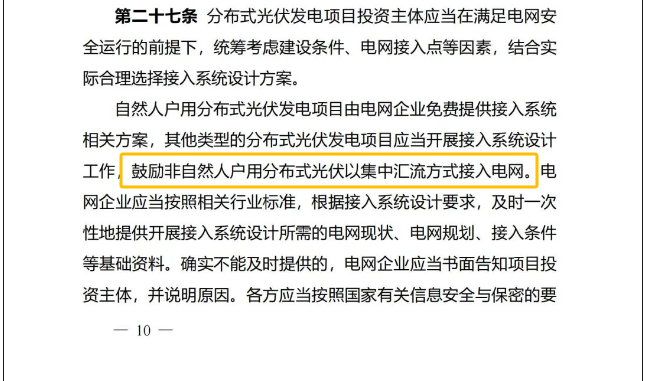
Entering 2025, in the new version of the Distributed Photovoltaic Management Measures issued by the National Energy Administration, it is clearly proposed again that non-natural person household distributed PV is encouraged to connect to the power grid in the form of centralized confluence.
Since then, the encouragement of whole-village development and local consumption has been more or less mentioned in the distributed photovoltaic management measures or draft opinions successively issued by many provinces.
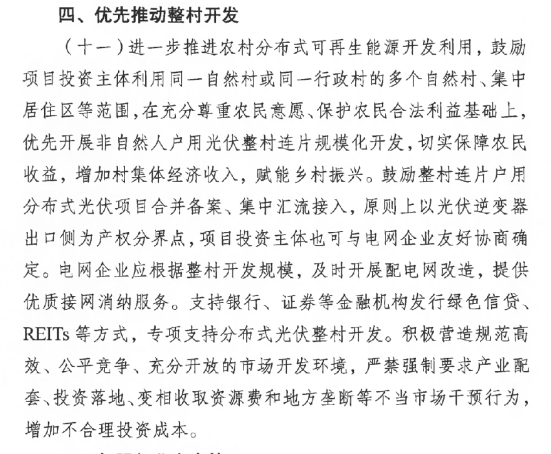
Among them, the "Implementation Opinions on Implementing the 'Measures for the Administration of Distributed Photovoltaic Development and Construction' (Draft for Comments)" issued by Jiangsu on April 10 is the most clear and specific.
The document proposes: Give priority to promoting whole-village development, encourage project investors to use the scope of the same natural village or concentrated residential area, and on the basis of fully respecting farmers' wishes and protecting their legitimate rights and interests, give priority to carrying out large-scale contiguous whole-village development of non-natural person household PV. It is allowed to combine the filing of contiguous household distributed PV projects in the whole village and connect them to the grid through centralized confluence. Support banks, securities and other financial institutions to issue green credit, REITs and other methods to specifically support the whole-village development of distributed PV.
Why is the policy level vigorously promoting the whole-village development of household PV? Hezi believes there are at least three major considerations.
From the perspective of promoting new energy development, the significance of whole-village development of household PV lies not only in alleviating the contradictions between access and absorption and opening up incremental space for distributed PV installed capacity, but also in improving grid friendliness through strong regulation and control — grid connection at high voltage in the name of the village collective, mandatory unified monitoring and protection, effectively ensuring grid safety.
At the same time, encouraging whole-village development is also conducive to guiding the household PV market to explore diversified business models, such as solving financing difficulties through cooperation models like "government + enterprise + bank".
In addition, objectively speaking, whole-village development is also conducive to promoting the standardization of household PV development and driving enterprises to shift from extensive expansion to refined operation.
From the perspective of advancing the reform of the power market, non-natural person distributed PV and general industrial and commercial distributed PV are the main forces for distributed PV to participate in power market-oriented transactions in the future. The "whole-village development" adopts the grid connection model of general industry and commerce, which is in line with the development direction of the power market. Moreover, under the "whole-village development" model, it is also easier to realize the "observable, measurable, adjustable and controllable" of distributed PV, laying the foundation for full participation in market-oriented transactions.
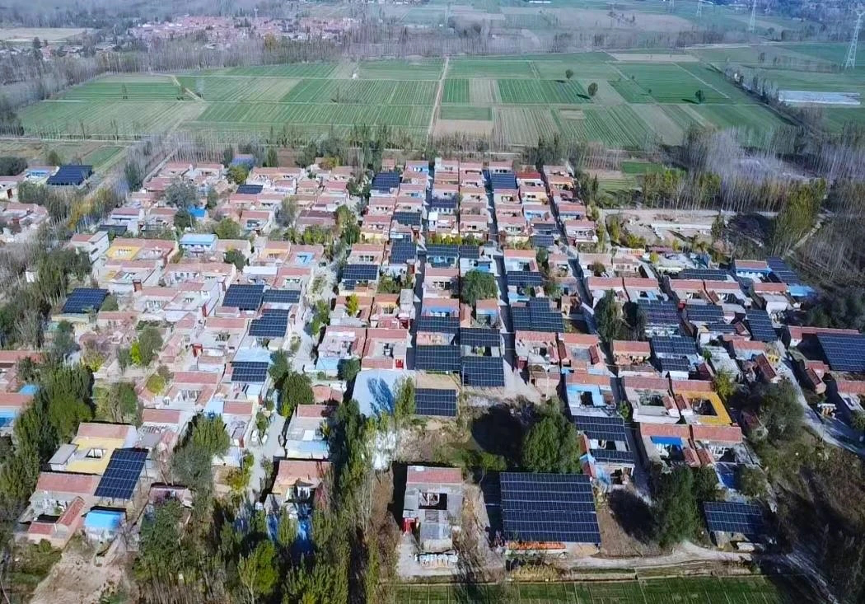
From the perspective of supporting the comprehensive revitalization of rural areas, compared with the traditional model, the "whole-village development" model of household PV is more effective in driving the income increase of village collectives and promoting employment. Farmers obtain stable income through roof leasing or electricity sales, while village collectives increase public funds through project operation, which are used for infrastructure construction and public welfare undertakings. In addition, links such as PV installation and operation and maintenance can also create local jobs and drive the transformation of rural labor force.
In recent years, more and more regions have linked the whole-village PV development with rural revitalization work. For example, in September 2024, Danfeng County, Shangluo City, Shaanxi Province issued a notice on the "Implementation Plan for the 'PV+' Rural Revitalization Demonstration Project for Thousands of Villages and Ten Thousand Households in Danfeng County", which will identify 1 administrative village in each town (sub-district) of the county, select a PV or solar heating project construction model, and build a whole-village PV (solar heating) demonstration project with a capacity of about 2 megawatts in each village. By the end of 2024, about 12 whole-village roof distributed PV and solar heating demonstration projects with a total capacity of about 24,000 kilowatts will be completed in the county.
In terms of the implementation model, the village collective will establish a village new energy project company. Towns (sub-districts) are encouraged to raise funds as 10% of the registered capital, the project implementation company provides 10% of the registered capital, and banks and guarantee institutions provide loans and guarantees.
Opportunities and challenges coexist
Shifting from building individual household PV power station systems to developing whole-village centralized confluence and grid connection projects is undoubtedly accompanied by both opportunities and challenges. In the implementation process, it may face difficulties such as technical support, regional selection, project investment, and promotion coordination, testing the enterprise's resource coordination and platform operation capabilities.
A developer admitted that he encountered many difficulties when overseeing a whole-village development project for the first time. First of all, at the technical level, the technical implementation of whole-village development is different from that of individual household development. It involves professional knowledge such as step-up equipment and high-voltage drawing design, which needs to be actively supplemented; secondly, in terms of project coordination, each project has more or less unpredictable problems, so it is very necessary to screen a sufficient list of projects in the early stage.
In addition, it is worth noting that although whole-village development reduces reliance on traditional channel partners, enterprises still need to rely on channel partners with government relations or local resource integration capabilities (such as large energy enterprises or regional service providers) to promote project implementation.
In the future, if a large number of enterprises pour into the whole-village development track, it will undoubtedly further raise the development threshold and put forward greater requirements for the resources and "connections" of development enterprises.
