


Views: 0 Author: Site Editor Publish Time: 2026-02-10 Origin: Site


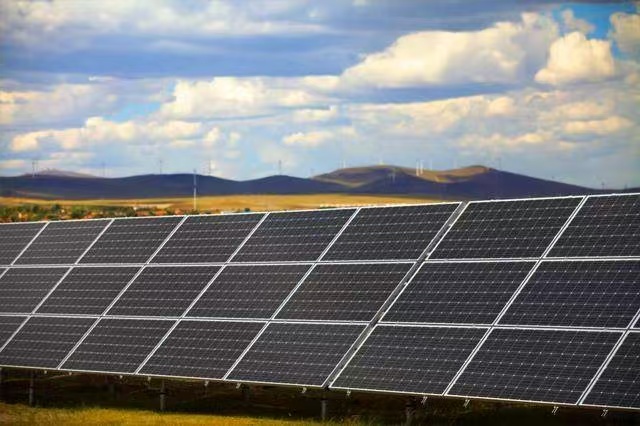
The annual output value of the manufacturing end exceeded 1 trillion yuan, the total export volume exceeded 180 billion US dollars, the cumulative installed capacity exceeded 120 GW, and the components were exported to over 200 countries and regions... During the "14th Five-Year Plan" period, China's photovoltaic industry has achieved many breakthroughs of milestone significance.
Recently, at the "Review of the Development of the Photovoltaic Industry in 2025 and Outlook for 2026" seminar, the China Photovoltaic Industry Association made predictions on the development of China's photovoltaic industry in the next five years: During the "15th Five-Year Plan" period, the global average annual new photovoltaic installed capacity will reach 725 to 870 GW. Among them, the global new photovoltaic installed capacity in 2026 will be 500 to 667 GW. During the same period, China's average annual new photovoltaic installed capacity will be 238 to 287 GW.
The newly installed capacity of photovoltaic power in 2026 may drop by more than 20%.
By 2025, China's cumulative installed capacity of photovoltaic power generation will enter the terawatt era. According to the latest data released by the National Energy Administration, the newly added installed capacity of photovoltaic power generation in China in 2025 will reach 315.07 GW, with a year-on-year growth of over 13%, setting a new historical record. The newly added installed capacity of photovoltaic power generation has remained the world's first for 13 consecutive years.
However, this rapid growth momentum may come to a halt. The China Photovoltaic Industry Association predicts that in 2026, under normal circumstances, the newly installed photovoltaic capacity will be 180 GW, and under an optimistic scenario, it will be 240 GW, representing a year-on-year decline of 23.8% to 42.9%. If this prediction comes true, it will be the first year-on-year decline since the new photovoltaic cycle began in 2020.
However, it is expected that the newly installed capacity will gradually increase starting from 2027, reaching 270 to 320 GW by 2030.
In 2026, due to the fact that new policies such as the distributed management approach and the market-oriented reform of feed-in tariffs have just been introduced, the market is in a wait-and-see mood, which is expected to lead to an adjustment in new installations. However, as the effects of policies promoting the integrated development of new energy and direct connection of green power start to show, new installations are expected to return to an upward trend. Nevertheless, one thing is certain: the growth rate will slow down, but the increment will remain stable, said Wang Bohua, an advisor to the China Photovoltaic Industry Association.
In the international market, during the "15th Five-Year Plan" period, it is expected that the European market will remain stable; the United States, affected by policy uncertainties, will see a downward adjustment in its installed capacity expectations; India's installed capacity expectations will grow rapidly; and the pace of photovoltaic planning and deployment in emerging markets such as the Middle East, North Africa, and sub-Saharan Africa will accelerate.
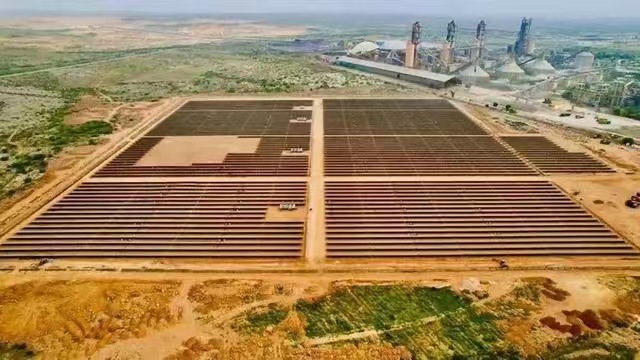
Against this backdrop, during the "15th Five-Year Plan" period, the development philosophy and logic of China's photovoltaic industry will undergo significant transformation, shifting from competing on scale and price to competing on value.
"Transforming the development model requires attention to two aspects of work," Wang Bohua pointed out. First, at the policy level, a combination of policies should be used to promote the transformation and upgrading of the industry, including addressing the issue of enterprises' low-price and disorderly competition, promoting the orderly upgrading of backward industries, and facilitating industrial upgrading. Second, enterprises need to expand their second growth curve. On one hand, they should build a technological moat, accelerate the mass production of silver-free/low-silver technologies, reduce reliance on silver, and reserve perovskite and tandem cell technologies, among others. On the other hand, they should boost the coordinated development of the industrial ecosystem, build an integrated energy ecosystem of photovoltaics, energy storage, and hydrogen energy, and expand new photovoltaic application markets such as commercial aerospace, vehicle-mounted photovoltaics, and consumer electronics.
The manufacturing end should adhere to the development direction of intelligence, greenness and integration, with the three aspects supporting and empowering each other. Wang Bohua believes that intelligence provides technical support for greenness and integration, including intelligence in R&D and production manufacturing, intelligence in power station construction and operation, and assistance in the intelligent transformation of society, etc.; greenness establishes a value orientation for intelligence and integration, including promoting green energy use in the photovoltaic industry chain, "green production for green consumption" in key energy-consuming links, and the development of energy-saving and carbon-reduction technologies, etc.; integration expands the practical space for intelligence and greenness.
On the application side, during the "15th Five-Year Plan" period, it is necessary to further expand the supply of new energy, explore new non-electric utilization methods for new energy, actively promote the integrated development of new energy, comprehensively enhance the consumption level of new energy, and improve the market price mechanism for a high proportion of new energy.
At the same time, it is necessary to constantly explore a new pattern of opening up in the photovoltaic industry. On January 9, 2026, the Ministry of Finance and the State Taxation Administration issued the "Announcement on Adjusting the Export Tax Rebate Policy for Photovoltaic and Other Products", stipulating that starting from April 1, 2026, the value-added tax export rebates for photovoltaic products such as silicon wafers, solar cells, and modules will be completely cancelled.
Wang Bohua said that the direct impact of this adjustment is that the export costs of enterprises have significantly increased, squeezing the profit margins of enterprises. In the short term, it is manifested as a sudden increase in costs and a "rush to export" window period. In the medium term, it will affect the differentiation of enterprises and accelerate the clearing of excess capacity. Enterprises that rely on export tax rebates and subsidies or those that lack export competitiveness may exit the market, especially small and medium-sized enterprises. "However, in the long term, it will force technological innovation, optimize the competitive landscape, and promote the construction of more sustainable competitiveness for China's photovoltaic industry in the global market," Wang Bohua said.
In addition, enterprises must break away from the past extensive overseas expansion methods and pay more attention to the strategic and flexible nature of their layout. By integrating with the country's diplomatic strategy, they should promote the diversification and variety of cooperation models and operation methods to enhance their adaptability and comprehensive competitiveness in the international market. For instance, they can promote the export of standardization, testing, and certification services, and build an operation model that combines wholly-owned, joint venture, and OEM operations.
China's photovoltaic industry chain still holds a dominant position globally.
At the meeting, Wang Bohua reviewed the development of China's photovoltaic industry during the "14th Five-Year Plan" period. He said that over the past five years, China's photovoltaic industry has achieved leapfrog development in terms of scale, technology, market, and application.
Among them, the leapfrog growth in application aspects such as installed capacity and power generation is the most remarkable. Data from the China Photovoltaic Industry Association shows that during the "14th Five-Year Plan" period, China's cumulative new installed capacity of photovoltaic power is 4.5 times that of the "13th Five-Year Plan" period, and the cumulative new power generation is 3.6 times that of the "13th Five-Year Plan" period. From 2023 to 2025, the annual new installed capacity of photovoltaic power will be higher than the cumulative amount during the "13th Five-Year Plan" period for three consecutive years; the power generation in 2025 alone will be higher than the cumulative amount during the "13th Five-Year Plan" period.
At the manufacturing end, production capacity has expanded significantly. By the end of the 14th Five-Year Plan, the production capacity of the four major links of polysilicon, silicon wafers, solar cells, and modules will increase by 3 to 6 times compared to the end of the 13th Five-Year Plan. By the end of the 14th Five-Year Plan, the production capacity of polysilicon will exceed 3.5 million tons, that of silicon wafers will exceed 1,500 GW, that of solar cells will exceed 1,400 GW, and that of modules will exceed 1,100 GW.
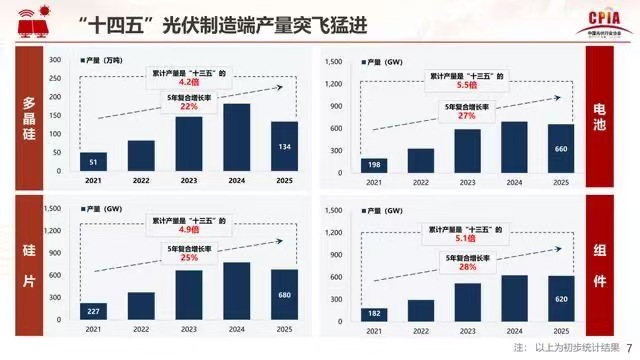
Along with the simultaneous increase in production capacity, the output has also risen significantly. During the "14th Five-Year Plan" period, the output at the manufacturing end has experienced a remarkable growth. The cumulative output of all aspects of photovoltaics is 4 to 5 times that of the "13th Five-Year Plan" period. The lowest compound growth rate over the five years was 22%, making it the fastest-growing period among the past three five-year plans.
"During the '14th Five-Year Plan' period, China's photovoltaic industry went through two distinct phases: The first was the period of rapid production growth, driven by the 'carbon neutrality' goal and a series of policies from the national and local levels. The photovoltaic industry achieved large-scale production, leading to a continuous increase in output, reaching its peak in 2023. The second was the period of production adjustment, as the rapid growth in the early stage led to an oversupply situation, causing the product prices to drop rapidly and resulting in a slowdown in industry growth." Wang Buhua analyzed.
Photovoltaic technology innovation remains vigorous and full of highlights. For the polysilicon process, which is the most energy-consuming part, during the "14th Five-Year Plan" period, electricity consumption decreased by 21%, energy consumption dropped by 28%, steam consumption decreased by 62%, and per capita output increased by 88%. The automation level of production lines has been continuously improving.
Silicon wafers have achieved comprehensive and multi-dimensional technological progress. The market share of N-type monocrystalline silicon has rapidly increased from a single-digit percentage in early 2021 to 97% in 2025. The overall thickness of silicon wafers has decreased by 12% to 27%, and has tended to stabilize in recent years. Wang Buhua analyzed that this is mainly due to two reasons. One is that the motivation for cost reduction is weakening, and the other is that continuous thinning must seek a balance between improving yield and controlling fragmentation rate, which increases the technical difficulty accordingly.
The battery production process is the most technologically intensive, where technological innovation is most active and there are the most innovative points. The annual average efficiency of N-type batteries has increased by 0.3%. The mainstream technologies are rapidly evolving, and the proportion of TOPCon technology has risen from around 2% in 2021 to 87.6% at present, becoming the mainstream. The consumption of silver paste in mainstream batteries is decreasing, and the consumption of silver paste in TOPCon batteries has dropped by more than 35% during this period. Laboratory battery efficiency has continued to break through. During the "14th Five-Year Plan" period, 11 research institutions in China broke the laboratory efficiency records set by the National Renewable Energy Laboratory (NREL) of the United States 27 times, accounting for 55% of the global total, doubling compared to the "13th Five-Year Plan" period. Notably, in 2025 alone, 6 research institutions in China broke the NREL laboratory battery efficiency records 9 times, which is the highest in the past five years.
The power of components continues to increase. In 2025, the power of the 182 model component reached 595W, an increase of 50W compared to 2021; the market share of double-sided components rose to 80.4%, becoming the absolute mainstream.
However, as production at the manufacturing end has soared and technologies have advanced rapidly, the prices of the entire industrial chain have dropped significantly. Compared with the period at the beginning and end of the "14th Five-Year Plan", the prices of all four links have decreased by more than 60%, and the price of silicon wafers has even dropped by 82.8%.
As one of the "new three things" in foreign trade, the export of photovoltaic products has also undergone a profound transformation from rapid expansion to structural adjustment. During the "14th Five-Year Plan" period, the total export volume showed an overall growth trend, but the export product structure has undergone new changes, becoming more diversified. The components, which long occupied the dominant position in export products, have seen a decreasing annual growth rate in exports, but still remain at a high level; while the proportions of silicon wafers and batteries have been increasing.
Europe, as the traditional main market for our photovoltaic module exports, has witnessed a slowdown in market demand and a continuous decline in its share. Meanwhile, markets in Asia and Africa have rapidly emerged, with countries such as Pakistan, the Philippines, Laos, Algeria, and Congo emerging as significant growth points. The battery export market is highly concentrated, with Asia consistently occupying the dominant position in the battery export market, with its share remaining above 88%.
"China still holds a dominant position in the global photovoltaic industry," Wang Buhua explained. By 2025, China's production capacity for polysilicon, silicon wafers, solar cells and modules will account for 96%, 96.2%, 91.3% and 80.1% of the global total respectively.
