


Views: 0 Author: Site Editor Publish Time: 2026-08-25 Origin: Site


The rapid adoption of bifacial technology has fundamentally changed yield modeling for utility and commercial solar projects, introducing complex structural decisions regarding module encapsulation. Procurement teams, system designers, and residential installers frequently conflate power-generation mechanisms with physical encapsulation structures. Choosing the wrong architecture leads to roof-load failures, accelerated degradation, or compromised Levelized Cost of Energy.
To maximize project ROI, buyers must evaluate the structural integrity, degradation profiles, weight trade-offs, and installation realities of dual-glass versus single-glass transparent backsheet modules. Understanding these material differences ensures long-term asset performance and structural safety across diverse deployment environments. You need to match the physical build of the panel to the specific environmental and mechanical stresses of your site.
Mechanism vs. Structure: Bifaciality dictates energy generation from both sides of the cell; dual-glass and single-glass refer strictly to the protective materials encapsulating those cells.
Durability vs. Weight: A bifacial dual glass solar module offers superior resistance to moisture, micro-cracking, and fire (Class A), but typically weighs 15-25% more than a single-glass counterpart.
Degradation & Lifespan: Dual-glass architectures generally boast lower annual degradation rates and longer performance warranties (up to 30 years) due to the elimination of permeable polymer backsheets.
Application Alignment: Single-glass transparent backsheet modules are ideal for weight-constrained commercial and residential rooftops, while a dual glass solar panel is the industry standard for ground-mounted utility-scale projects and harsh environments.
Misunderstanding module spec sheets leads to inaccurate yield projections and structural engineering errors. Project stakeholders often assume that any panel generating power from both sides must inherently feature a glass rear layer. This assumption ignores the distinct evolution of photovoltaic cell mechanisms versus physical panel construction, creating oversights during the procurement phase. We see this constantly in the field when mounting hardware arrives mismatched to the panel frame type.
Defining the bifacial solar module starts with the active silicon. Bifacial cells are engineered with specialized rear contacts that allow them to capture direct sunlight on the front and reflected light, known as albedo, on the rear. This active silicon requires physical protection from environmental elements to function reliably over decades in the field. The cells themselves do not dictate the outer casing.
Single-glass construction utilizing a transparent backsheet represents one method of encapsulation. This architecture pairs a standard 3.2mm tempered front glass with a UV-resistant, transparent polymer backsheet. The transparent polymer allows reflected light to reach the rear of the bifacial cells while keeping the overall module weight comparable to traditional monofacial panels. Installers favor this for roof mounts where every pound per square foot matters.
Dual-glass construction takes a different approach. This architecture utilizes two layers of heat-strengthened glass, typically ranging from 1.6mm to 2.0mm each, sandwiching the solar cells in the middle. The rear glass layer replaces the polymer backsheet entirely, providing a rigid, impermeable barrier against environmental degradation. This is the heavy-duty option for ground mounts and tracker systems.
Addressing common market confusions requires separating the cell technology from the encapsulation. First, "double-glass" does not mean two layers of glass on the front face; it strictly refers to one front layer and one rear layer. Second, a panel can be bifacial without being dual-glass, as seen with transparent backsheet designs. Conversely, manufacturers produce monofacial dual-glass panels designed purely for extreme durability in harsh environments, where the rear glass is opaque.
To further clarify, let us look at the specific material layers. A standard single-glass module stacks glass, EVA encapsulant, cells, EVA, and a polymer backsheet. A dual-glass module stacks glass, POE or EVA encapsulant, cells, POE or EVA, and a second sheet of glass. That rear glass sheet changes the entire mechanical profile of the unit.
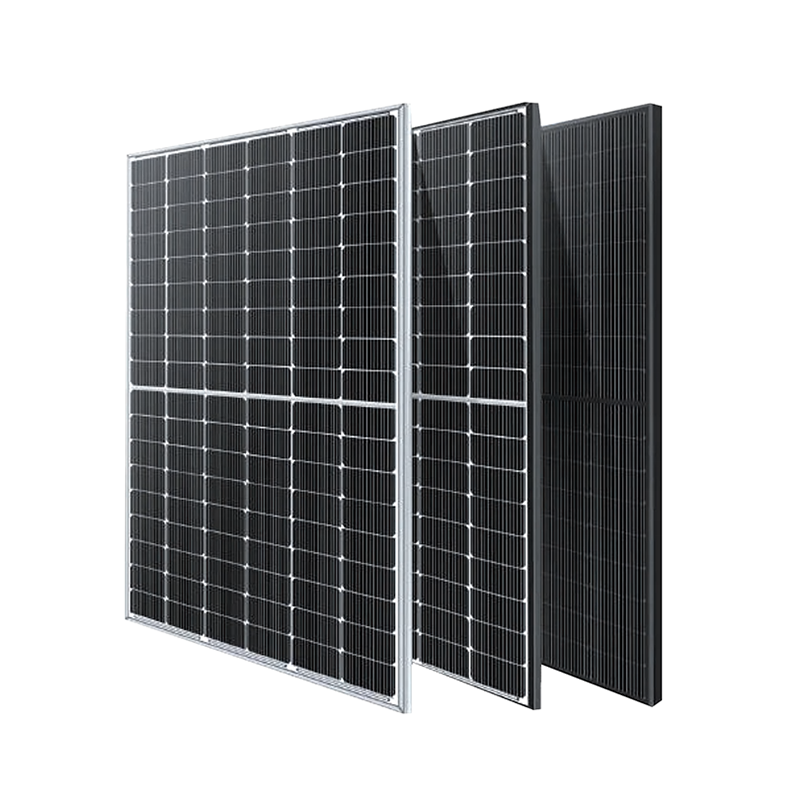
Evaluating encapsulation materials requires understanding how they directly impact long-term cell viability. The physical properties of glass versus polymer dictate how a module handles moisture, heat, and mechanical stress over a 25 to 30-year operational lifespan. Field data consistently shows that the outer envelope fails long before the silicon degrades.
The glass thickness trade-off is a primary engineering consideration. Dual-glass modules utilize thinner glass sheets, usually 1.6mm or 2.0mm, compared to the standard 3.2mm sheet used in single-glass modules. This reduction in individual sheet thickness manages the overall weight penalty while maintaining the structural rigidity required to protect the internal silicon cells from dynamic loads. You cannot simply slap two 3.2mm sheets together; the panel would be too heavy for standard mounting rails.
Moisture ingress and Potential Induced Degradation (PID) resistance strongly favor glass-glass construction. The impermeable nature of glass virtually eliminates moisture penetration into the module core. In contrast, breathable polymer backsheets allow trace amounts of moisture vapor to enter over time. By blocking moisture, dual-glass architectures significantly reduce the risk of PID, ensuring more stable power output throughout the system's life. This is particularly relevant in humid coastal regions.
Thermal cycling and heat dissipation present another divergence. Glass and polymers expand and contract at different rates when exposed to temperature fluctuations. Single-glass modules experience asymmetrical thermal expansion, which stresses internal components. Dual-glass symmetry ensures both sides of the module expand uniformly, reducing thermal stress on the internal busbars, solder joints, and the silicon wafers themselves. This symmetrical expansion prevents the micro-warping that severs cell connections over time.
The N-type bifacial solar module advantage pairs perfectly with robust encapsulation. Leading manufacturers predominantly pair N-type TOPCon or HJT cells with dual-glass structures. This combination maximizes the higher bifaciality factor of N-type cells while protecting them from moisture. The superior degradation profile of N-type silicon, characterized by lower Light Induced Degradation (LID) and Light and elevated Temperature Induced Degradation (LeTID), is best preserved within a highly stable dual-glass environment to secure long-term yield potential.
When specifying modules for a large array, the encapsulant material between the glass and the cells also matters. Polyolefin Elastomer (POE) is frequently used in dual-glass setups instead of standard Ethylene Vinyl Acetate (EVA). POE offers better volume resistivity and lower water vapor transmission rates, further bulletproofing the module against PID. This material science upgrade is a direct response to the extended 30-year warranties expected from glass-glass products.
Assessing physical robustness against site-specific environmental stressors determines which encapsulation method will survive local conditions. Modules must withstand decades of wind, snow, chemical exposure, and potential impact without compromising internal electrical continuity. A panel that looks fine on a spec sheet can easily fail under a heavy snow load if the frame and glass thickness are inadequate.
Mechanical load capacities for snow and wind differ based on construction. Evaluating the flexural strength of a 2.0mm+2.0mm dual glass solar panel versus a 3.2mm single-glass panel reveals distinct behaviors under stress. While dual-glass modules offer excellent overall rigidity, improper mounting can lead to micro-cracking under heavy dynamic loads if the thinner glass sheets flex beyond their tolerance. Proper clamping and rail support are essential to leverage their structural strength. You must follow the manufacturer's exact clamping zones.
Fire safety ratings provide a clear distinction between the two architectures. Dual-glass modules inherently achieve a Class A fire rating because both the front and rear surfaces are non-combustible glass. Single-glass modules utilizing polymer backsheets typically achieve Class C ratings. For projects in wildfire-prone areas or facilities with strict building codes, the non-combustible nature of glass-glass construction is a decisive factor. Roof-mounted systems on commercial buildings often require Class A ratings to meet insurance mandates.
Extreme weather performance highlights the chemical inertness of glass. Coastal projects face constant salt mist, while agricultural sites expose panels to high ammonia concentrations. Polymer backsheets can degrade, yellow, or embrittle under continuous chemical exposure. Glass remains entirely unaffected by salt mist and ammonia, making dual-glass encapsulation the preferred choice for these harsh deployment environments. Additionally, while the front glass is thinner, the dual-layer construction provides substantial resilience against hail impact when properly certified.
To illustrate the differences clearly, consider the following comparison of physical and performance traits between the two architectures:
Feature | Dual-Glass Bifacial Module | Single-Glass (Transparent Backsheet) |
|---|---|---|
Front Glass Thickness | 1.6mm to 2.0mm | 3.2mm |
Rear Material | 1.6mm to 2.0mm Glass | Transparent Polymer Backsheet |
Average Weight (72-cell equiv.) | 28kg - 32kg | 22kg - 24kg |
Fire Rating | Class A | Class C (typically) |
Moisture Permeability | Zero (Impermeable) | Low (Breathable) |
Standard Warranty | 30 Years | 25 Years |
Translating module specifications into field logistics, labor costs, and project scale is where theoretical advantages meet practical constraints. The physical characteristics of the chosen module directly influence mounting hardware, installation speed, and structural engineering requirements. You cannot ignore the physical toll that heavier panels take on an installation crew.
The weight factor and structural constraints represent the most significant installation hurdle. Dual-glass modules carry a noticeable weight penalty, often weighing 28kg or more, compared to the 22kg to 24kg range typical of single-glass panels. This increased mass has profound structural implications across different project types. A few extra kilograms per panel adds up to tons of additional dead load across a large array.
When planning the physical deployment, specific project categories face unique challenges:
Utility solar module arrays must account for the added weight on single-axis trackers. Heavier modules require robust tracker motors, upgraded bearings, and careful consideration of torque tube shading. Rear-side junction box placement must also align with the mounting rails to avoid obstructing the bifacial yield.
Commercial and Industrial rooftops frequently face strict dead-load constraints. The additional weight of dual-glass panels may exceed the roof's structural capacity or require excessive ballast, making single-glass transparent backsheet modules a more viable option.
Residential pitched roofs present handling challenges. Lifting and maneuvering heavier dual-glass panels on steep inclines increases installer fatigue and safety risks. Structural reinforcement may also be necessary to meet local building codes.
Handling, clamping, and labor realities dictate the pace of installation. Installing heavier modules generally requires more labor hours and careful handling to prevent breakage. Specific mounting clamps, often requiring rubber gaskets, are necessary to prevent edge-cracking on frameless or thin-framed dual-glass modules. Installers must strictly adhere to manufacturer torque specifications to avoid inducing stress fractures at the mounting points.
To ensure a successful deployment of heavier dual-glass modules, site managers should follow a strict operational sequence:
Verify the structural capacity of the mounting system or roof structure with a licensed engineer, accounting for the specific weight of the dual-glass modules.
Procure mounting clamps specifically rated for the frame thickness of the chosen modules, ensuring they include the required EPDM rubber gaskets.
Calibrate all torque wrenches on site to the exact specifications provided by the module manufacturer to prevent over-tightening and subsequent glass fracturing.
Adjust the tracker control software, if applicable, to account for the increased mass and altered wind-stow parameters of the heavier array.
Implement a two-person lift policy for all modules exceeding 25kg to mitigate installer fatigue and reduce the risk of dropping panels.
Moving beyond cost-per-watt to evaluate total lifecycle value is essential for accurate financial modeling. The initial procurement price is only one component of the project's overall financial performance over a 30-year operational horizon. You have to model the degradation curve accurately to see the real returns.
Upfront CAPEX differences exist between the two architectures. Analyze the manufacturing cost delta between dual-glass and transparent backsheet modules by factoring in current supply chain realities. Dual-glass modules require a specialized bill-of-materials, often utilizing POE encapsulants instead of standard EVA to prevent PID and delamination. This specialized BOM, combined with the cost of a second glass sheet and heavier aluminum frames, typically results in a slightly higher upfront procurement cost.
Warranty implications heavily influence long-term financial projections. Single-glass modules generally offer standard 25-year linear performance warranties. In contrast, the robust nature of a bifacial dual glass solar module allows manufacturers to provide 30-year performance warranties. Calculating the financial impact of a 0.4% annual degradation rate versus a 0.45% or higher rate over three decades reveals a substantial difference in total energy yield. That half a percent compounds significantly over thirty years.
LCOE impact for commercial and residential projects requires a comprehensive decision framework. Project developers must weigh the higher upfront cost and potentially increased installation labor of dual-glass against its extended yield lifespan and reduced replacement risk. In environments where polymer backsheets are prone to premature failure, the higher initial investment in dual-glass construction rapidly pays for itself by avoiding costly mid-life module replacements. You spend more on day one to secure reliable generation on day ten thousand.
Neither architecture is universally superior; the choice depends strictly on structural constraints, geographic environmental exposure, and project scale. Selecting the right encapsulation method requires aligning the physical properties of the module with the specific demands of the installation site.
Choose single-glass transparent backsheet modules for weight-restricted commercial or residential roofs and projects requiring lower upfront labor costs. Their lighter weight simplifies handling and reduces structural load requirements. Choose a bifacial dual glass solar module for ground mounts, utility-scale tracker systems, high-albedo environments like snow or white membranes, and extreme weather zones where chemical exposure or moisture ingress poses a significant threat.
Consult with a reputable commercial solar panel supplier to obtain bankability reports and verify module availability.
Request site-specific yield simulations using tools like PVSyst to model the exact albedo and rear-side generation potential.
Engage structural engineers early in the design phase to verify mounting capacities, dead loads, and wind load ratings before finalizing procurement decisions.
Audit your mounting hardware specifications to ensure compatibility with the frame thickness and clamping requirements of your selected modules.
A: Yes, dual glass panels are typically 15-25% heavier than their single glass counterparts. This weight increase occurs because the lightweight polymer backsheet is replaced by a dense layer of heat-strengthened glass, adding several kilograms to the total module weight.
A: Yes, single glass bifacial panels utilize a transparent polymer backsheet instead of an opaque one. This design allows reflected light to reach the rear of the bifacial cells while keeping the module lighter and easier to handle than a dual-glass version.
A: Dual glass panels typically use two sheets of 1.6mm or 2.0mm heat-strengthened glass. This is a shift from the single 3.2mm sheet found in traditional panels, balancing the need for structural rigidity with overall weight management.
A: N-type modules generally offer superior performance due to a higher bifaciality factor, lower light-induced degradation, and better low-light efficiency. These characteristics result in higher overall energy yields over the system's lifespan compared to older P-type technology.
A: A bifacial module captures reflected light on its rear side, providing a 5-20% energy yield boost depending on site albedo and mounting height. The dual-glass construction ensures this active rear side is fully protected from moisture and environmental degradation.
A: While dual glass offers excellent overall rigidity, the front glass is thinner. It is critical to verify specific hail impact ratings on the spec sheet, such as resistance to 25mm or 35mm ice balls, to ensure adequate protection for your region.
A: Yes, but it requires careful evaluation. The increased weight necessitates structural engineering verification to ensure the roof can bear the dead load. Installers also face handling limitations due to the heavier panels on pitched surfaces.


